Monday, June 22, 2020

Orpheus (1950, Jean Cocteau)

Quest Status: 706 / 1000

TSPDT Rank #339

If the work of filmmakers like Marcel Carne and Jean Renoir can be described as "poetic realism," then the work of Jean Cocteau should be described as "poetic fantasy." In his first film, Blood of a Poet, Cocteau attempted to crystallize the poetic experience in film form, creating one of the most bizarre and uncanny surrealist films ever made in the process. If it weren't for the brief image of a lyre at the end of that film, it's likely that no one would have connected it with the Greek myth of Orpheus and Eunycide. But as the case may be, it turned out that Blood of a Poet laid a lot of the stylistic and thematic groundwork for Cocteau's modern adaptation of the Orpheus myth over 15 years later.


Cocteau's Orpheus transfers the ancient Greek myth to contemporary Paris, recasting the golden-voiced Orpheus as a legendary poet as famous for his dashing good looks as his poetry. When a belligerent up-and-coming rival poet is killed in a roadside accident, he is called to accompany the young firebrand's princess benefactor to a country village where he witnesses the dead man being brought back to life and whisked into a mirror by the princess and her cohorts. The next day, he wakes up by the side of the road as if waking from a dream. Upon returning home, he becomes obsessed with intercepting strange messages from the princess' car radio that he hopes will lead him back to her, neglecting his pregnant wife Eunycide in the process. The princess' concierge, Heurtebise, stays behind and attempts to help the couple, until the revelation that the princess is a manifestation of Death sends Orpheus and Eunycide to the underworld and sets into motion a doomed romance that promises tragedy for all involved.


The parallels between this film and Blood of a Poet are unmistakable in retrospect. The idea of mirrors as a portal to an "unreality" that hides man's darkest secrets, is carried over and expanded upon here, as are the special effects which portray characters crossing into this parallel world. No longer does the poet splash into the mirror like a swimming pool, instead being absorbed like a mirage, smoothly and silently. One need only don a special pair of gloves to pass through the mirror's earthly exterior. Then there's the recurring visual motif of statues, the princess of Death watching Orpheus with eyes painted on her eyelids, and the idea of poetry as an art which requires unimaginable pain and self-sacrifice in order for only minuscule returns of success. But while Orpheus shares many surrealist visual ideas with its predecessor, Cocteau presents them here in the context of a coherent, if fantastical, story with a sense of magical fairy-tale wonder that's far removed from the obscure stream-of-consciousness style of Blood of a Poet.

--- 294 films remaining ---

Saturday, June 13, 2020

REWIND: Vampyr (1932, Carl Theodor Dreyer)

TSPDT Rank #207

Initial viewing: c. 2006-2008

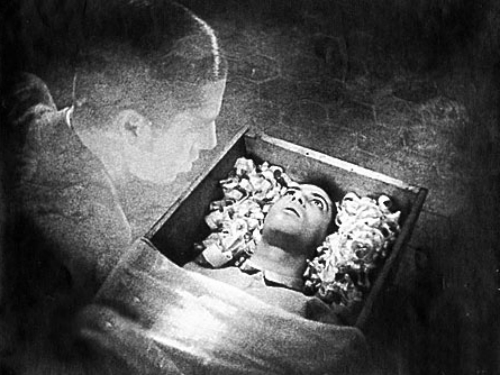
Vampyr is an early talkie with a ghostly atmosphere, aided by its disjointed production style and a main character described in the opening intertitles as “a dreamer for whom the line between the real and the supernatural became blurred.” Coming on the heels of director Carl Theodor Dreyer’s iconoclastic masterpiece of silent cinema, The Passion of Joan of Arc, Vampyr saw Dreyer pair up with the European aristocrat Nicholas de Gunzberg (aka “Julian West”) to try his hand at the horror film genre. The result has less in common with the Hollywood horror films of the day than it does with other privately-produced experimental films of the time period, such as Blood of a Poet and L’age d’or.


As in many famous surrealist films, Vampyr features a cipher-like protagonist who wanders through a series of strange events with little apparent motivation or narrative consistency. When Allan Gray first enters his room at the village inn, he is carrying what looks like a fishing net and rods - although since he never uses them, it’s difficult to know what they are. He passes a leering deformed man on the stairs and sees another man carrying a large scythe preparing to take a ferry across the river. Could he be the Grim Reaper? He is traveling away from our hero, but already it’s clear that there is danger afoot. This initial sighting is only the first of many instances in which Gray crosses paths with sinister characters but escapes unscathed himself. The reason for this is unclear, but whatever it is, Gray is usually painted as an observer rather than an active participant.


Nevertheless, what exactly Gray is witnessing is rarely clear. For viewers in the early 1930s, for whom the Universal horror classics like Frankenstein and Dracula were breaking new ground in mainstream horror cinema, an experimental horror film like Vampyr would have most likely sent most viewers into a state of disorientation and confusion. Even today, it has the potential to confound, especially upon first viewing. Knowing that Gray is obsessed with the supernatural and subject to dreaming, whether awake or not, the viewer must always bear in mind that he might be subconsciously filling in gaps in the story. As the film progresses, it becomes clear, with the help of frequent intertitles from a book about the supernatural, that a vampire is behind all of the strange happenings in the village. But strangely enough, by the time this revelation comes, it’s already too late for Gray to be an active participant in the fight against the foul creature. Instead, this role is assumed by a peripheral character, an anonymous servant who happens upon Gray’s book about vampires and decides to take matters into his own hands.


If Vampyr has a weakness, it’s that it relies too heavily on intertitles to explain the vampire phenomenon, with little visual evidence to confirm this information to the viewer. However, the lack of visual clarity creates a truly dreamlike atmosphere which de-emphasizes story in favor of making the viewer feel as uneasy and disorientated as its main character. This is a technique that would come to be a key component of the horror genre in later decades, albeit in much more regulated doses. Vampyr also displays a style which is markedly different from the theatrical style which defined Dreyer's later work, experimenting with visual rhythm and special effects that tested the boundaries of the horror genre at a time when filmmakers were only just starting to scratch the surface of the genre’s cinematic potential.

Sunday, June 7, 2020

DOUBLE FEATURE: Sansho the Bailiff / The Life of Oharu

One of the things that's kept me from exploring Kenji Mizoguchi's filmography before is the sheer number of acclaimed films in it, together with an obsession for chronological order which I have recently thrown to the wind. It turns out that all you need to do is just choose a movie and watch it. Who knew?

Sansho the Baliff (1954, Kenji Mizoguchi)

Quest Status: 704 / 1000

TSPDT Rank #93

**TOP 100 NOW COMPLETE!**

Sansho the Bailiff depicts a world which is outwardly beautiful but inwardly cruel. Presented with a chance to get ahead, most people will do so at the expense of others. Presented with a chance to help others, most people will choose only to help themselves. Even traditional power structures can't be trusted. Children of government leaders can be sold into slavery and treated like animals, while those who benefit from slavery are rewarded by the system for their troubles. The corruption and moral bankruptcy depicted in this period piece, which takes place during Japan's medieval Heian era, are so timeless that it might as well take place today.

The Film Sufi: “Sansho the Bailiff” - Kenji Mizoguchi (1954)

As the opening titles point out, Sansho the Bailiff was based on an old folk tale, and it moves with a deliberate mesmerizing power befitting of its source material. It's a story that takes one crushing narrative turn after another, bombarding the viewer with cruelty but amazing them with unexpected developments that keep them guessing right to the end. This is masterful storytelling - a story with deep moral value and timeless entertainment value. Except that it might be too cynical and depressing to satisfy repeat viewings. As the son of the titular imperial tax collector and slave owner says after leaving his father's house to become a Buddhist monk, "I found that people have little sympathy for things that don't directly concern them. They're ruthless. Unless those hearts can be changed, the world you dream of can not come true." Sansho the Bailiff puts forward a dream in which one person can change the world they live in - a fantastic riches to rags and back again story. But while the world may change for the better or for the worse, the ultimate realization is that human suffering remains no matter what. And as the story reaches its pitiful conclusion, there's not much to do but break down in tears at the promise of happiness blown away like dust on the wind.


The Life of Oharu (1952, Kenji Mizoguchi)

Quest Status: 705 / 1000

TSPDT Rank #255

While the films he made after, such as Ugetsu and Sansho the Bailiff, might be more famous, The Life of Oharu is one of Kenji Mizoguchi's most potent personal statements. He had made numerous films about women's suffering over the course of his career, but Oharu distills this concern into a simple series of episodes chronicling a stately court maiden's descent into disgrace and prostitution over a series of decades. Beginning at one of the lowest points in the life of the titular Oharu (Kinuyo Tanaka), as a broken-down prostitute wandering the back streets of feudal-era Kyoto, the film then tracks back to her fleeting romance with a lowly retainer (in a brief and almost unrecognizable appearance by Toshiro Mifune) in her youth, reviewing the series of misfortunes that befell her as a result. Reflecting the Buddhist perspective that shows up frequently in Mizoguchi's later films, the film eventually returns to where it started, creating a structure in which the end leads to the beginning and the beginning leads back to the end in an endless cycle of suffering.


The various ordeals that Oharu is made to endure over the course of the film serve to illustrate a point about the status of women as objects in society. In Oharu's dizzying descent from the imperial court to the gutter, she endures prostitution in various forms - each of which she passively performs a function for men at her own expense, only to suffer the full weight of responsibility for her actions in the eye of public opinion. Although it takes place in 17th-century Tokugawa-era Japan, The Life of Oharu plays out like a damning feminist statement about the lowly status of women in 20th-century modern Japan. Each time Oharu attempts to act for herself, she is punished by being forced progressively lower on the social ladder. Each subsequent level on this ladder, from manorial concubine to high-class courtesan to house servant to broken-down prostitute, represents yet another form of objectification allowing Oharu to be consumed and disposed of by the men around her. Mizoguchi's unwavering concentration on his actors, particularly his fearless lead actress Kinuyo Tanaka, creates a relentless narrative that plummets downward in a dizzying spiral which sucks the viewer in and involves them fully in the doomed heroine's plight. Even more so than the other Mizoguchi films I've seen so far, The Life of Oharu makes a uniquely personal impression that couldn't have been made by any other filmmaker.

--- 295 films remaining ---

Wednesday, May 27, 2020

Orlando (1992, Sally Potter)

Quest Status: 703 / 1000

TSPDT Rank #500

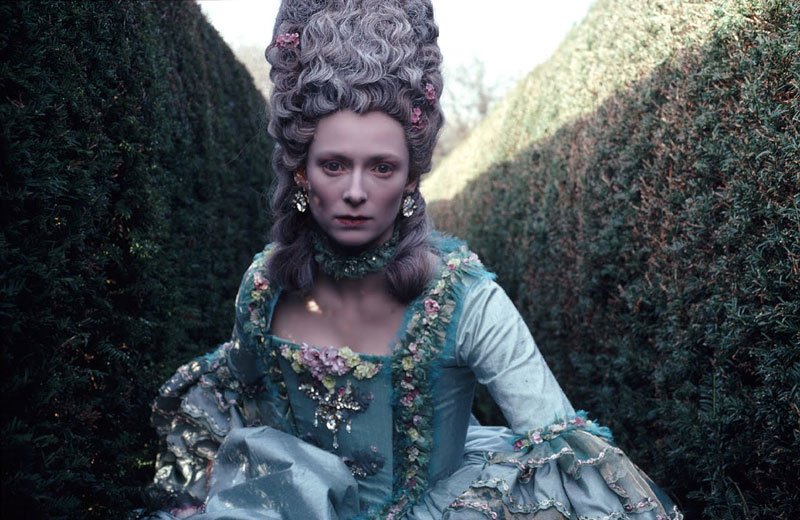
An early-20th century aristocratic woman is reimagined as a 17th-century English nobleman who mysteriously becomes a woman on her 400-year-long journey into the present. Being an unconventional historical fantasy featuring an androgynous actor in the lead role and directed by a woman, it's not a shock that Orlando isn't more well known. To put it in context, remember that at the time of its release, Basic Instinct was riding a wave of sexual controversy, with its brilliant but dangerous bisexual female villain and her provocative leg crossing shot. But what about a film that features a woman playing a man, who transforms into a woman mid-way through the film without warning, only to proclaim "Same person. No difference at all... just a difference sex."

Heroines of Cinema: Tilda Swinton and Sally Potter's Orlando ...

Basic Instinct was the source of much debate and controversy at the time of its release, although Orlando gives the viewer just as much material for consideration and discussion, without the sensational cheap thrills. Orlando (Tilda Swinton) is not a pathological killer, nor is his ambiguous sex portrayed as devious or threatening. He drifts through four centuries almost unnoticed - an unimportant aristocrat who lives a life of leisure and privilege. Sally Potter covers these four centuries briskly, using thematic intertitles such as "Love," "Poetry," and "Politics" to convey shifts in Orlando's life and the accompanying jumps in time. As a result, Orlando often feels like a series of vignettes, a capsule history of England seen through the eyes of the ruling classes.

Orlando - Movie Review - The Austin Chronicle

Based on a novel by the great English writer Virginia Woolf, with the titular character modeled on Woolf's real-life friend and lover Vita Sackville-West, Orlando portrays history not with the sweeping narrative devices of most historical epics, but with the delicate touch of a character study. Orlando has experiences which transcend time and age, but here they are captured as snapshots in a single life, individual moments in time which flow into one another in a cycle which eventually leads us back to the beginning. Orlando is a masterpiece of simplicity, never overwhelming the viewer or forcing ideas into their heads. Orlando is a symbolic character, just as believable a man as she is a woman, whose importance as a trans figure lies in her matter-of-fact gender fluidity. In this sense, audiences today might still not be ready for the ambiguity and fleeting beauty of Sally Potter's time and gender-defying ode to the English aristocracy.

--- 297 films remaining ---

Thursday, May 21, 2020

W.R.: Mysteries of the Organism (1971, Dusan Makavejev)

Quest Status: 702 / 1000

TSPDT Rank #694

"Make love, not war." That's all that Dusan Makavejev was trying to say in this cinematic treatise about the revolutionary power of orgasms, which was banned in his native Yugoslavia and led to his exile from the country. To him, the orgasm could be just as useful in communist Yugoslavia as in the capitalist, freedom-loving, commie-hating USA. W.R. seems like the type of movie that could have been an underground hit with the American hippie counterculture of its era, but maybe their idea of "free love" was less radical and intellectual than what Makavejev sets forth in this film.


Still, that’s not to suggest that the ideas were all Makavejev's own. Much of that credit is due to the titular "W.R.," the psychoanalyst and philosopher William Reich, one of Sigmund Freud's early assistants. Later in life, having emigrated to the US to escape the Nazis, Reich explored the science behind orgasms in pursuit of human liberation. Initially viewed as an eccentric but serious scientist in his adopted small-town community of Maine, a shift in opinions caused him to be labelled as a communist and sentenced to prison--with the US government ordering all of his books to be burned.


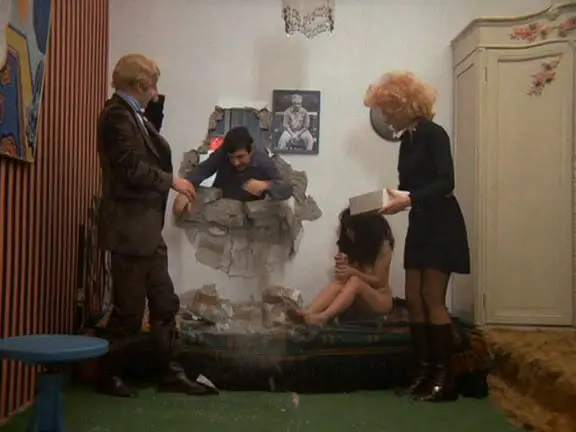
The first section of W.R. is primarily a pseudo-documentary tribute to Reich. His wife, scientists continuing his work in secret, and members of the community where he lived in Maine are all interviewed. The interviews are preceded by a pastoral sex scene seen through a kaleidoscope, with a female narrator enthusiastically proclaiming William Reich as a communist hero. But then we find that he wasn't a communist. Or at least, in a series of archival montages, we see the difference between the repressed Soviet version of communism espoused by Joseph Stalin and Reichian ideas of human liberation through free love and elimination of physical tension.


From here on, Makavejev shifts his focus from William Reich to Yugoslavia, where a fiery young woman named Milena sermonizes about the orgasm's potential benefits for communist society in a roaring balcony speech that mocks pontificating politicians as much as it mimics them. Ironically, at the time of her speech, her roommate is making passionate love to a Communist soldier, while she is alone, having been spurned by a self-righteous boyfriend. So she decides to pursue a decorated Russian figure skater and sexually frigid model Communist, subtly named Vladimir Ilyich. When he eventually succumbs to her, she winds up with her head on a platter - literally - although she still has a thing or two to say about the sorry state of affairs that led to her untimely demise.

WR: Mysteries of the Organism (1971) / AvaxHome

In between, Makavejev occasionally cuts away to New York, where Tuli Kupferberg, lead singer of the underground band The Fugs, is seen roaming around New York in a tattered guerilla uniform carrying a toy machine gun. There are also interviews with one of Andy Warhol's superstars, the drag queen and actress Jackie Curtis, as well as rare documentary footage of a porn magnate having a plastic model made of his penis. Make no mistake about it, this is a true underground film. But it has a lot of period footage that makes interesting from a historical standpoint, as do its unique observations on the connections between sex and politics, not to mention the similarities between Soviet communism and American capitalism - a daring comparison to make during the height of the Cold War. To Dusan Makavejev, it's all fascism - but seen through his kaleidoscopic lens, it comes out fractured and brilliant, like shards of light illuminating the darkness of a world gone mad.

--- 298 films remaining ---

Sunday, May 10, 2020

JFK (1991, Oliver Stone)

Quest Status: #701 / 1000

TSPDT Rank #659

I've never liked Oliver Stone. It's been years since I've seen one of his films. While I might often agree with his political viewpoints, I've never been able to swallow the way he presents them. In his films, every line is so on the nose and each narrative turn seems so perfectly executed that I feel like I'm being manipulated. When it comes to recounting history, his style lies somewhere between that of a snake oil salesman and a tabloid journalist. Or should I say propagandist? Former MPAA president Jack Valenti issued an angry statement shortly JFK was released in which he compared it to Leni Riefenstahl's infamous Triumph of the Will. Having recently seen that film as well, I can say that I definitely don't see many similarities between the two. Triumph of the Will was a product of its time, a monument to Nazi power in a nation that already supported Adolf Hitler. It's impressive, but not persuasive. JFK, however, attempts to sway the viewers' thinking, to convince them of the existence of a conspiracy in the Kennedy assassination in service of the military-industrial complex. And it does so in a way that is masterful, entertaining and timeless.


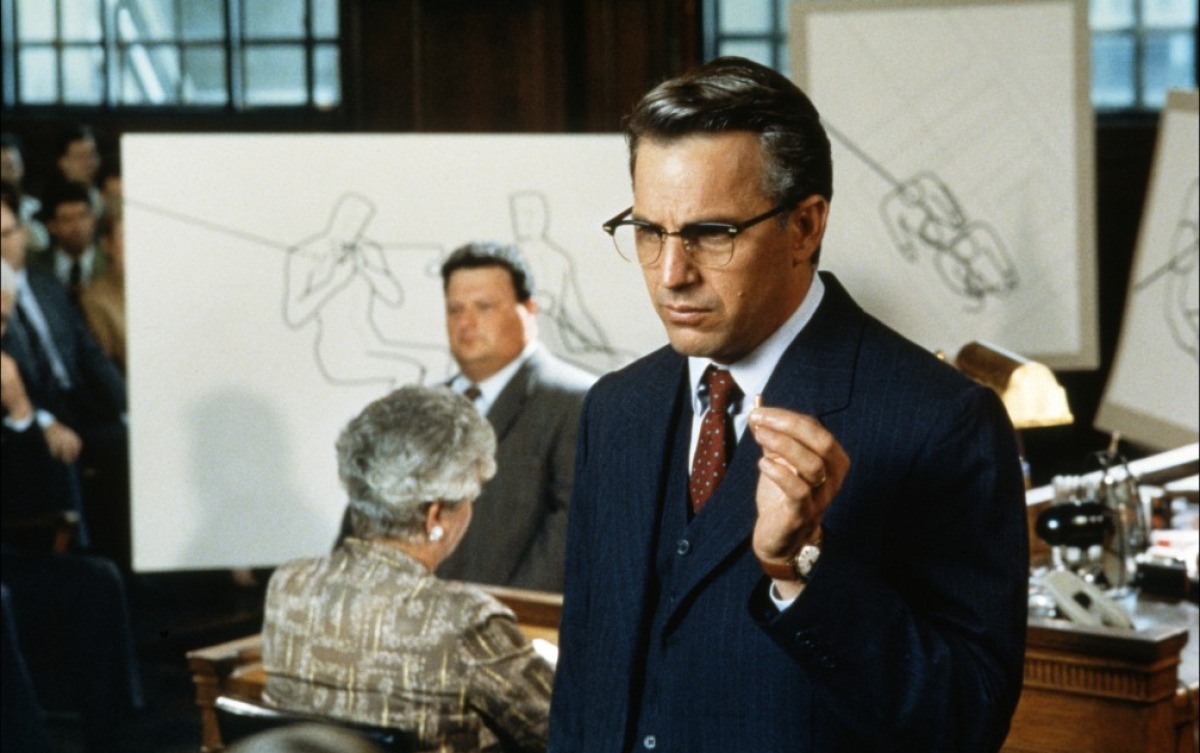
JFK runs over three hours, but never drags, never misses a beat. The cast assembled to portray the many cogs in the conspiracy is astounding (Joe Pesci stands a head above the rest as a hopped-up pilot and possible CIA operative). Stone paid over $85,000 to use the legendary 8mm Zapruder film which documents the head shot that killed John F. Kennedy, then combined it with incredible reenactments of the events surrounding the assassination to enhance the conspiracy theory laid out by New Orleans DA Jim Garrison (Kevin Costner) in the film's climactic courtroom sequence. These reenactments, along with the montages of Garrison's investigations and various imagined historical flashbacks, are edited together with such speed and dexterity that it's impossible to distinguish the real and fictional elements of Stone's account. As a result, the conspiracy theory laid out in JFK is nothing if not easy to believe. The official "single shooter" theory that the Warren Commission produced is so inconceivable that we want to believe anything else offered to us.


But in the end, this is just another theory, although it's presented so convincingly that it looks like fact. Are we really supposed to believe that Lyndon B. Johnson really told the National Security Council, "Just get me elected, I'll give you your damn war," days after the "coup d'état" that killed Kennedy and gave Johnson the presidency? Is it possible that Lee Harvey Oswald wasn't even in the sixth floor window of the Book Depository when the President was shot? Like Garrison, presented in the film as a noble crusader for the truth, Stone seems to have been primarily motivated by a desire to get the assassination back in the minds of the American public - even if it took creating an alternate "counter-myth" to accomplish it. He certainly accomplished this with JFK, but the idea that many might accept its earnest speculations and documentary-style reenactments as fact is deeply troubling and tarnishes any positive effect it might have had in its call for the truth.

--- 299 films remaining ---

Monday, May 4, 2020

Shoah (1985, Claude Lanzmann)

Quest Status: #700 / 1000

TSPDT Rank #66

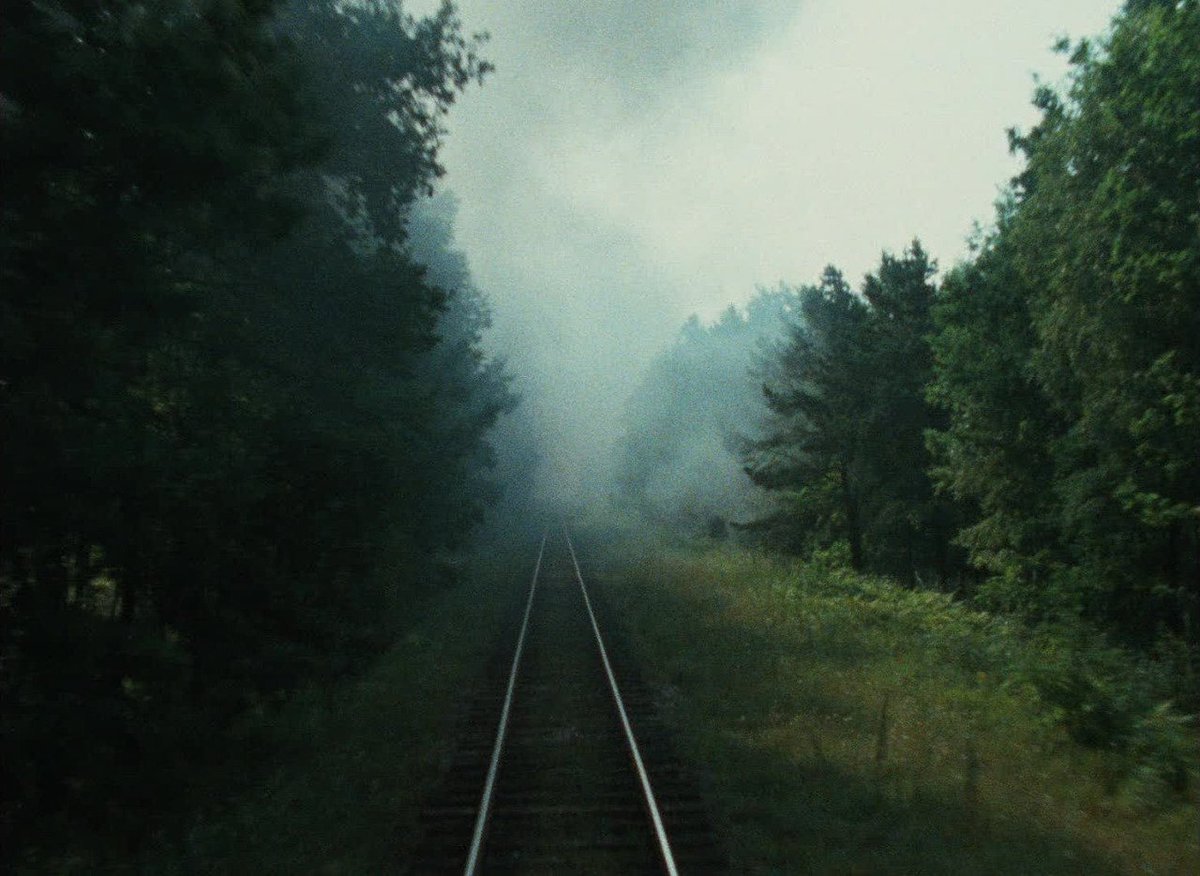
Of the top 100 films on the 1,000 Greatest Films list, I'm guessing that Shoah is usually one of the last ones that most people get around to watching. It consists of nine and a half hours of people talking about the Holocaust, combined with modern imagery of the sites where these atrocities took place. That's no one's idea of light viewing. Despite its length, the film moves deliberately and with unyielding purpose, like the continuously repeated shot of the train tracks that lead to the front gate of Auschwitz. Its scale is huge, but it has a definite structure and not a moment is wasted. In the opening intertitles, director Claude Lanzmann mentions that the editing process took five years. This dedication is evident in the finished film.


I have never seen a documentary so simple and pure, yet effective in its delivery. The film is composed almost entirely of two types of footage: interviews with those who experienced the extermination of Jews in Poland during World War II, and modern footage of the sites where that extermination took place. Raul Hilberg, a historian interviewed in the film, suggests that the only way to get a full picture of an event as inconceivably vast as the Holocaust is to focus on "minutiae or details," rather than asking big questions from the start. This idea perfectly describes Lanzmann's approach in Shoah. He patiently collected a breadth of interviews over a period of many years - ranging from survivors of various death camps, both Polish and German villagers, as well as a number of former Nazi officers and bureaucrats (often filmed without their knowledge using hidden cameras and covert surveillance vans). No matter who the subject is, Lanzmann is primarily interested in details, asking the most minute questions possible about the interviewee's memories - thoughts, impressions, names, feelings, sounds, smells, gestures.

Box Set Pick: Shoah

There are no voice-overs in Shoah, only direct interviews with people who lived through and experienced the Holocaust themselves - along with Hilberg, who presents Lanzmann with a few historical documents which put the interviews in context. There is no historical footage used whatsoever. Instead, there are many tracking shots through landscapes where the death camps took place: the ruins of Auschwitz' five crematoriums, the solitary track leading ominously to its front gate, the hill leading to the gas chamber at Treblinka, and the densely wooded pathway to the death pits at Chelmno. The testimony given by the interviewees is often paired with footage of the sites where the events they describe took place. This forces the viewer to listen to each subject's account carefully and pair it with the real locations in which it took place, leaving the visual horror entirely to the viewer's imagination.
Film Comment Magazine on Twitter: "R.I.P. Claude Lanzmann. Listen ...

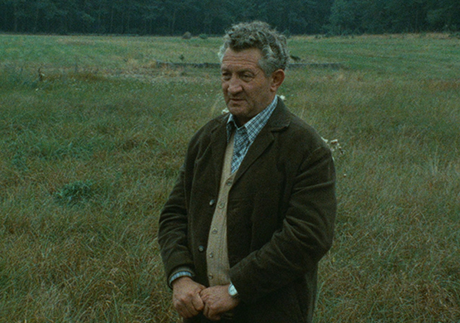
The first section of the film begins with the story of Simon Srebnik, one of the two survivors of the death camp in Chelmno, a small village which once had a large and prosperous Jewish population. He is first seen riding down a river that he often traveled down while a member of the Jewish "work detail" in Chelmno as a 13-year-old boy, singing the same German folk song that he was made to sing by the SS decades before. He also visits a field where hundreds of thousands of Jews where burned and buried in mass graves. "I can't believe I'm here," he says in quiet disbelief. Some hours later, after learning much more about what took place in and around that site, we see Simon standing in the same field again. It's only at this moment that we start to get a sense of what happened in that location, the horrible scars left on this plaintive rural landscape by the immense evil of the Holocaust.
The Film Comment Podcast: Shoah

The second part of the film focuses increasingly on the experiences of those who worked in the "special detail" within the death camps, maintaining the gas chambers and crematoriums, gradually building up to the influx of Jews from throughout Europe and the plans for rebellion and escape, followed by an examination of the Warsaw ghettos in the wake of the mass deportations which began in 1942. With an epilogue describing the last days of the uprising in the Warsaw ghettos during April 1943, Lanzmann strategically ends his story in the middle of the war, shifting the focus from the German's military defeat two years later to the total defeat of the Jews' right to be human beings. So we start with the two sole survivors of a single death camp, slowly accumulating details one after another, until finally the film seems to encompass the entire Jewish struggle during World War II - even if it can only convey a tiny cross-section of what happened, given the small number of survivors from the death camps and the lack of concrete evidence concerning the death camps.


Shoah ended up taking me over nine and a half hours to watch, as I continually replayed various scenes in an attempt to reconcile the horrible content of the interviews with the haunting serenity of the locations where they had taken place. It could be ten times the length and still not be able to make the immense evil of the Holocaust comprehensible. Still, the weight of the detailed testimonies it contains is immeasurable. Most of those featured in this film are now dead, but in this film they were given the opportunity to share experiences the like of which no other human beings in history have ever experienced. I learned things from this film that I never knew before, heard things that I can never forget. In Shoah, acknowledging that any attempt to understand the incomprehensible is futile, Claude Lanzmann set out to preserve the human experiences of those who lived through the incomprehensible. Shoah is not only a great film, it's an invaluable addition to the record of human history, no matter how much we might like to pretend that the events it describes could never happen in the modern world.

--- 300 films remaining ---