Thursday, March 26, 2020

FROM THE VAULTS: Husbands / Shadows

Dear readers,

Since it's the 10th anniversary of the blog this year, I have been looking back at my viewing history from the early years of my quest and trying to make a complete list of what I've watched over the years - especially the "lost" periods when I got tired of writing the blog. Most of the time I was just prioritizing watching movies over writing about them, but thankfully I still kept a record of what I was watching.

My writing for this blog also overlapped with my participation in the Internet Film Club, an international online discussion group which started as an email group in 2006 (I joined shortly after in 2007), and later transitioned to Facebook. I have just recovered some of my writing for that group, so I'll be sharing some of those posts intermittently to fill in some of the gaps in my quest. 

The first installment is a pair of films by John Cassavetes: Husbands and Shadows. I wrote about these two films for the film club just before I started the blog in January 2010 (with another Cassavetes film, Faces). So here there are now, for posterity...


Husbands (1970, John Cassavetes)

--Originally written 1/4/2010--

Current TSPDT Rank (2020 Edition): #281

[2010 Edition: #539] 

Husbands 

I introduced myself to the work of John Cassavete's with the great film Husbands. Simply, it's a film about three men going through a mid-life crisis but ... what's simple about that, right? It's a very profound film, as is Cassavete's style of filmmaking. He attempts to film reality, not actually in documentary form, but a mirror image of life and the real emotions of his characters. In this he succeeds, because the film feels very realistic, he brings the viewer unusually close to the characters and their problems. But at the same time, we notice the camera, and the way it's used to tell the story. Husbands is an extremely personal film, you can tell that it was created off Cassavetes' own mid-life crisis. It's a daring film in that you can tell that Cassavetes is just laying his soul bare for us to see. Overall, I thought it was very good. I had heard it was hard to watch but had no troubles with it.


Shadows (1959, John Cassavetes)

--Originally written 1/10/2010--

Current TSPDT Rank (2020 Edition): #437

[2010 Edition: #302] 

Shadows

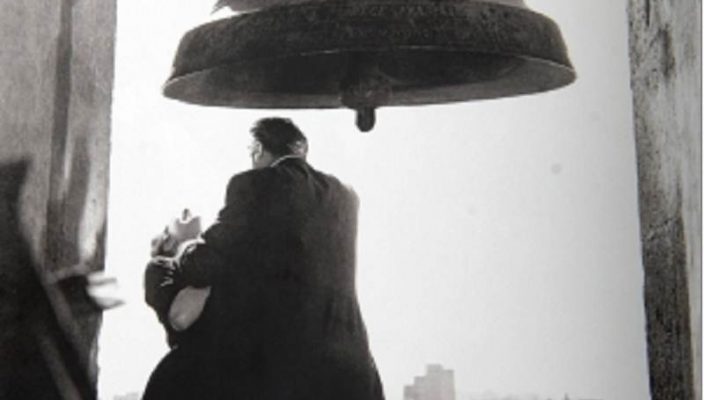
Shadows ... now here is a film that is a complete mess. It obviously had a lot of influence, as far as independent filmmaking goes (and especially the French new wave), and was very innovative for its
improvised acting, but it didn't work as a film for me. It seemed much more like one of Cassavetes' filmed improvising workshops. There's not really any main focus or idea, the camera just floats around from conflict to conflict - didn't really seem to matter what the conflict was - just so the actors could show off their improvisation skills. Also, the interracial romance (if you can even call it that) of the story was probably edgy and important for the time, but it's very irrelevant today.

The Piano (Jane Campion, 1993)

Quest Status: 690 /1000

TSPDT Rank #162

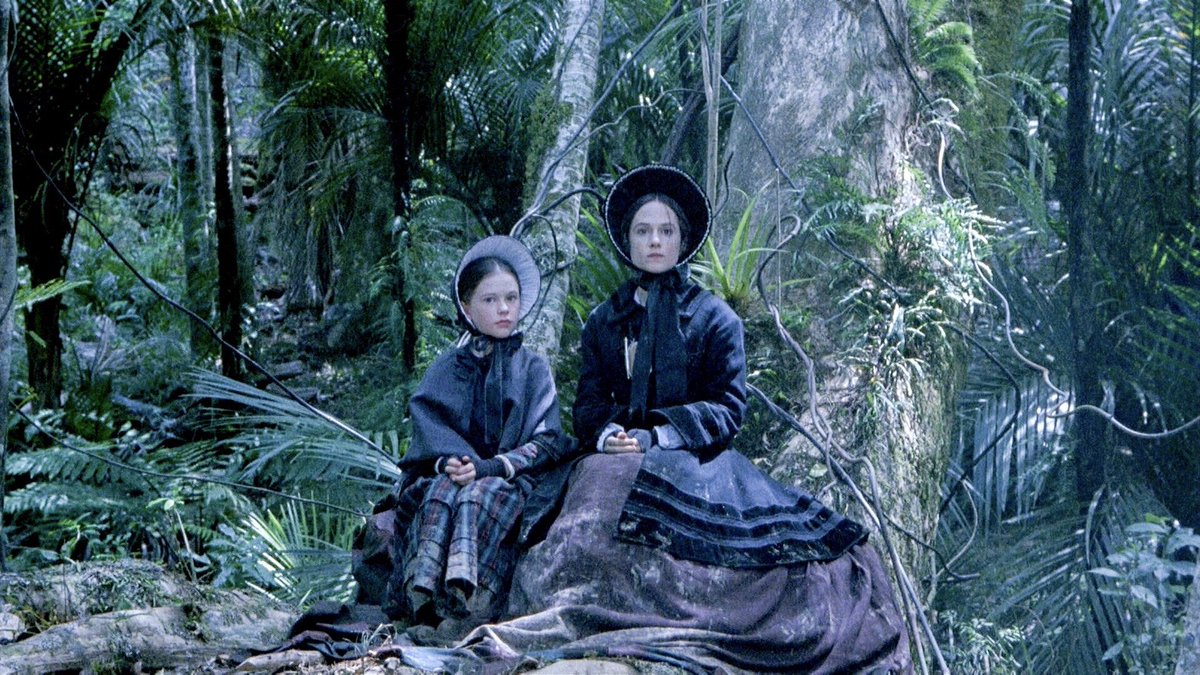
There aren't that many movies about female desire out there. Unsurprisingly, those that are out there tend be made by female directors most of the time. With The Piano, Jane Campion crafted a film about female desire that is both sensitive and earthy. Then there's the historical side of it - which takes us back into a barely settled 1850s New Zealand outpost. It's a world where men such as Sam Neill's Stewart send out for mail order brides from Scotland rather than settle for the few local unmarried gossips in their "settlement", a muddy swamp land in which the "roads" between houses are precariously placed boards leading across the mud. It's also a world where the cumbersome clothing that women wear is a metaphor for their sexual inaccessibility and the dense, tangled forests are a metaphor for the passion locked away in their hearts.

Cinematic Artistry on Twitter: "The Piano (1993) Director: Jane ...

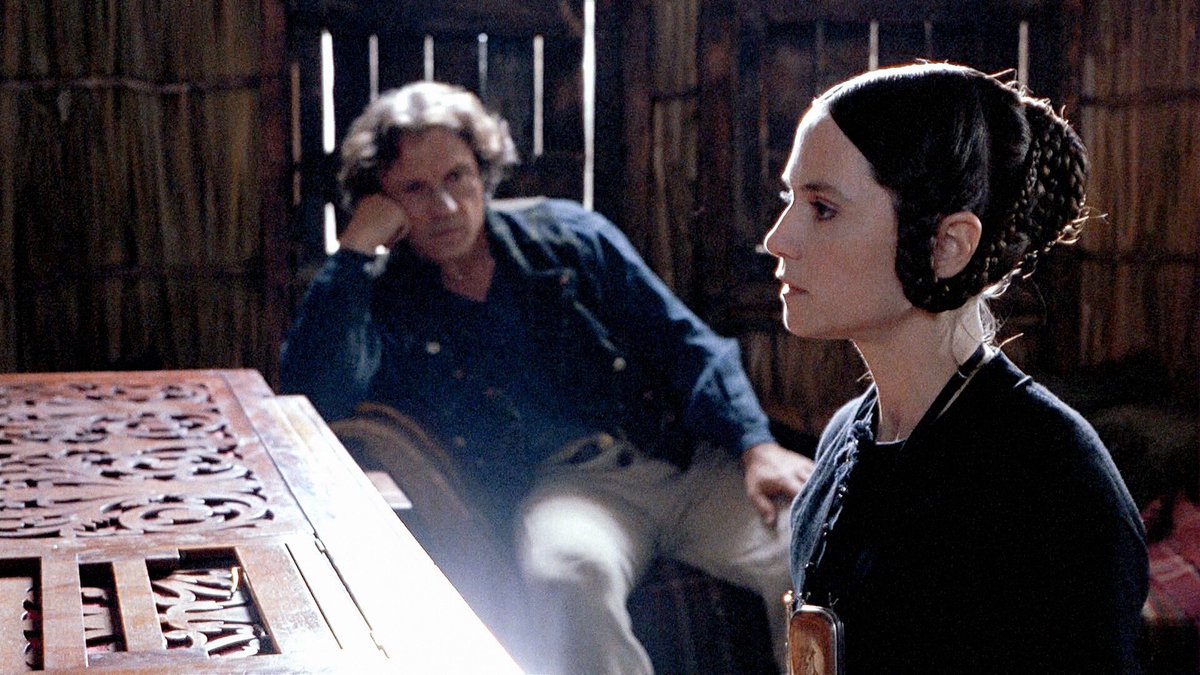
For Holly Hunter's Ada, this might be more the case than most. Hunter pulled off quite a laundry list of feats for this movie - portraying a mute woman with only the most subtle of perceptible emotions, playing solo piano as the sole auditory expression of her character's soul, speaking in a Scottish accent for the film's opening and closing monologues, and working with a sign language coach to design a personal sign language to be used with her daughter in the film (played by Anna Paquin). Without the power of speech, her muteness becomes an amplified symbol of her repression. Through Ada, Campion shows us how it feels to be alone, unable to speak for yourself, unable to change the path of your life.

Cinematic Artistry on Twitter: "The Piano (1993) Director: Jane ...

Of course, in everyone's life, there are choices to be made. These choices can change the path of your life no matter how repressed. Ada makes a choice from which there is no going back and it ripples through the second half of the film like an earthquake. It's fitting for a film about a mute woman that the emotions should be so powerful. The things that can't be expressed with words carry more weight. One scene in particular comes to mind. At a crucial point in the middle of the film, the camera zooms in on Ada gazing into a forest. But we don't see her face, instead getting a close view of her intricately braided and pinned hair, which dissolves into a shot of a deep and dark forest. The forest is silent, but seems to be alive and hiding immense secrets. Rarely do movies let you glimpse into the mind of their characters like this, but Jane Campion seems to pull it off effortlessly in The Piano.

--- 310 films remaining ---

Saturday, March 21, 2020

Celine and Julie Go Boating (Jacques Rivette, 1974)

Quest Status: 689 /1000

TSPDT Rank #199

There are many kinds of magic. Simple illusions, tricks on a stage, fortune telling by Tarot cards, mystic potions, everyday coincidences, and unexplainable events. Then there are dreams... maybe the most mystifying magic of all. In Celine and Julie Go Boating, Jacques Rivette made the connection between dreams and cinema. Many have made this connection before, but Rivette's concept here is particularly unique.

Image result for celine and julie go boating house

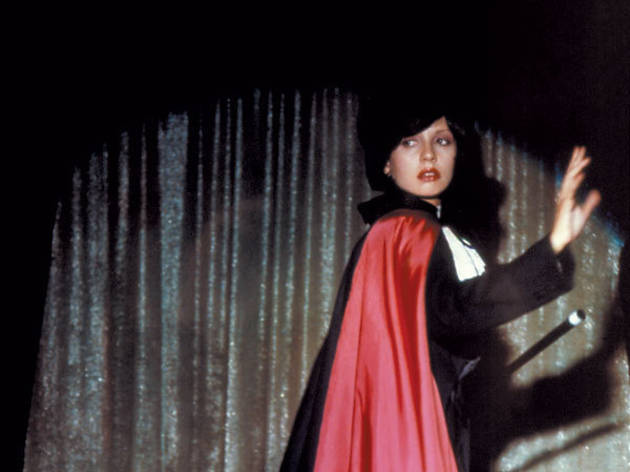
The film begins with an encounter between two women, the titular Celine and Julie, the former a librarian first seeing reading a book entitled "Magic" and the latter a low-rent magician at a sleazy dive bar disguised as a center for the arts. They have a strange attraction to each other and their lives quickly become entangled, the two becoming almost interchangeable. Furthermore, they both seem to have experienced something at a mysterious abandoned house, which neither remembers.


At this point, Rivette poses the question: What if we could relive our dreams, study them piece by piece and analyze their meaning? In so doing, what was initially beguiling and incomprehensible might become simple, even logical, and could therefore be overcome. This might sound like psychoanalytic therapy, but viewed today it seems to presage the coming of LaserDiscs, VHS, and DVDs, especially in the way that Celine and Julie play back their haunting visions while commenting and laughing at them like detached spectators. If you break down a film and analyze it, does it lose its magic? And could you ever really understand what it means?


Then there's the ending, which poses another question: If you could enter your own dream (or a film), what would it look like? Would anyone notice you? Would you have any effect on the action? These are just some of the questions that Jacques Rivette poses over the course of a 192-minute film that is endlessly fascinating and even riveting. It was my first encounter with a Rivette film - but it was long overdue. You can expect more on this unheralded French master before long.

--- 311 films remaining ---

Sunday, February 23, 2020

DIRECTORS SERIES: Luis Buñuel

Over the years, there are a lot of films that have slipped under this blog's radar, either because I saw them before I started the blog, or because I saw them during breaks from writing the blog. In the case of Luis Buñuel, one of my first favorite directors, although he has many films on the 1,000 Greatest Films list, very few of them have received an entry on this blog. There were also a few that I had never seen, so I thought I would take this chance to start a new "Directors Series" feature, in which I will review a series of films by one director and also make a list of the films by that director that I have previously seen, with links to past blog posts where available.


That Obscure Object of Desire

1977, TSPDT Rank #574
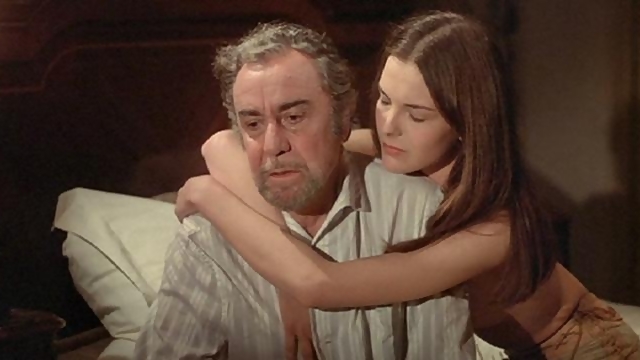
Image result for luis bunuel that obscure object of desire

Quest Status: #687 / 1000

The theme of old men obsessed with young women is a common theme in Luis Buñuel's films. Often, in films like El or Tristana, there was an element of social critique embedded within the story. But That Obscure Object of Desire is all the more interesting because it's an old man's film, Buñuel's last. As an old man, in this film Buñuel takes aim at his main character's naivety. He lusts after a beautiful young woman who willingly gives herself to him, proclaiming that she loves him, although she refuses to give him everything - leaving his desires perpetually unfilled. Did Buñuel feel sorry for this old man, played with an abundance of self-pity by Fernando Rey? It's hard to say. Maybe on some level, he did. But the old man's obsession with terrorist attacks also resonates with his unrequited relationship, in typical Buñuelian style. His inability to comprehend the constant terrorism around him is similar to his inability to understand his mistress' inaccessibility. She might really be the death of him, but why? Is her careless manipulation of him on the same level as the terrorists who seem so eager to undermine society for no detectable reason? As usual, even in his final film, Luis Buñuel was not about to give viewers any easy answers.


Los Olvidados

1950, TSPDT Rank #130

Image result for luis bunuel los olvidados

Quest Status: #688 / 1000

Luis Buñuel is known first and foremost as a surrealist, mainly due to the reputation of his first film, Un Chien Andalou, with social critiques of the upper middle class also an important trademark of his work. Social realism is usually not a genre that I associated with Buñuel. However, Los Olvidados is a social realist film, which has a lot in common with the Italian neorealist films of the same era. It's not without some of Buñuel's stylistic trademarks, including a haunting surrealist dream sequence and a hard-hitting approach to portraying events of poverty and cruelty which reveals his trademark cynicism. That being said, one key difference is the lack of irony here. This is not the over-the-top faux-documentary satire of Las Hurdes. It's a surprisingly sincere film designed to deliver a message about poverty's dehumanizing effects on children straight to the gut. But while it succeeds at this goal, I couldn't help but feel that Buñuel was a bit out of his territory here. The storytelling isn't as sharp as other neorealist films of the era, with an episodic structure sometimes lacking in variation. It's a shocking and sobering film, but didn't feel quite as focused as some of Buñuel's other films.

--- 312 films remaining --- 


Previously seen by Luis Buñuel:

Pre-2010
-Viridiana (1961)
-L'âge d'or (1930)
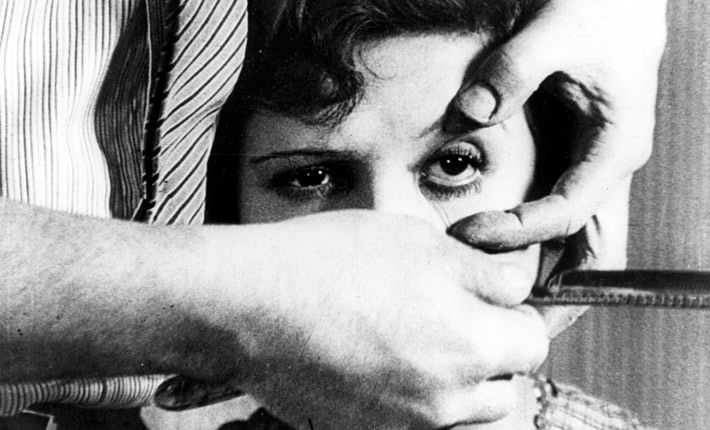
-Un Chien Andalou (1928)
-The Discreet Charm of the Bourgeoisie (1972)
-Land Without Bread (1932)
-The Phantom of Liberty (1974)
「un chien andalou」の画像検索結果

August 2010
-El (1951) review

Image result for luis bunuel el

-Simon of the Desert (1964) review

Image result for luis bunuel simon of the desert

July 2011
-Belle de Jour (1967) [no entry]

September 2011
-The Exterminating Angel (1961) [no entry]

March 2015
-Tristana (1970) review
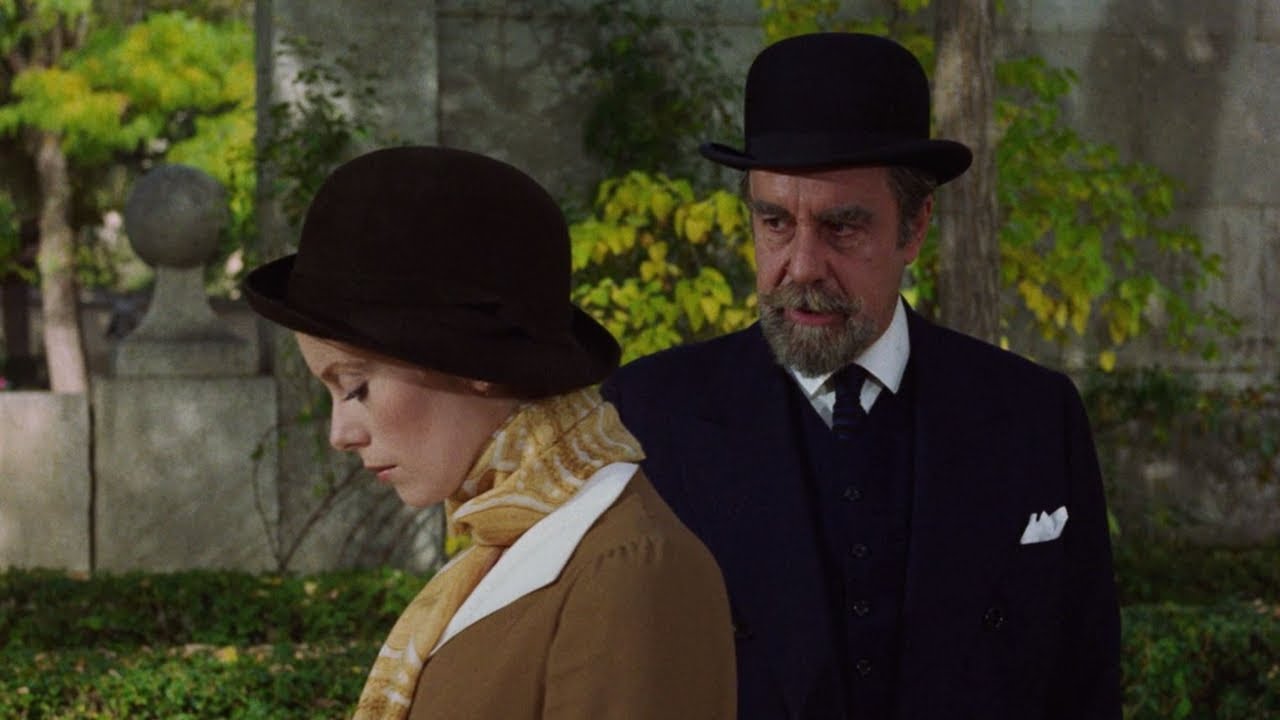
 Image result for luis bunuel tristana 

Monday, February 10, 2020

Chelsea Girls (Andy Warhol, 1966)

Quest Status: 686 /1000

TSPDT Rank #162

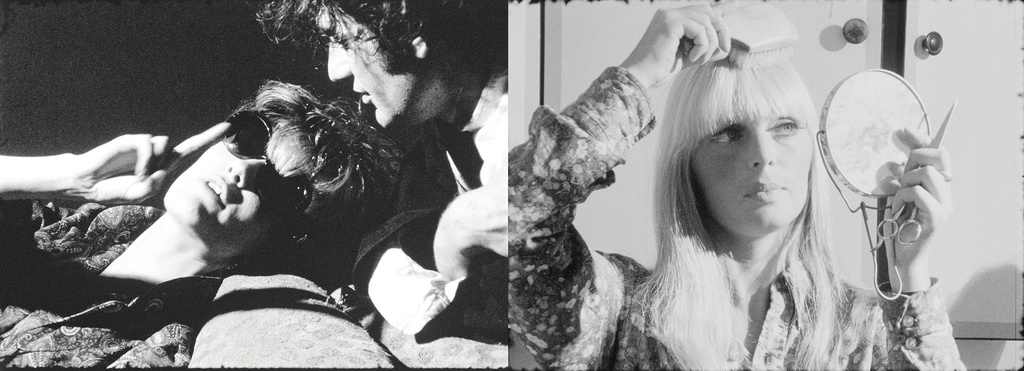
Seeing a 30-minute Andy Warhol film in a movie theater can be a test of one's patience, so it stands to reason that a 210-minute one would be really tough going (let's not even bring up Empire). However, watching Chelsea Girls at home gives you the option of digesting it in pieces. It's a collection of 12 episodes, about 33 minutes each, with two segments at a time shown side by side. As a fan of structuralist cinema, I was more interested in how this would have been presented in a cinema than in the content of the film itself - a fairly tedious compendium of degenerate behavior and drug-fueled rants.
Image result for chelsea girls andy warhol
Andy Warhol apparently intended that any two of the 12 episodes could be paired in whichever the combination the projectionist chose, with sound projected randomly by one of the two projectors. In theory, this would have allowed for many possible viewing experiences. The projection order described by Warhol's friend and occasional collaborator Jonas Mekas in his contemporary review of the film suggested an experience in which the initial reels were all black-and-white, with the color reels creating a "climax of terror" at the tail end of the film.

Image result for chelsea girls andy warhol
The Italian DVD release of Chelsea Girls, however, fixes the 12 episodes into a set running order, with the color and B/W reels occasionally paired together. There are many moments in which the pairings are visually interesting - the film was obviously made with an artist's eye and the pairings for the DVD were given a lot of thought. Still, as I watched the film, I frequently wished that there would have been more thought given to the structure of the film. The seemingly random dispersion of sound leads to long stretches of silence and makes episodes without any sound seem inconsequential - rather than giving them an edge of mystery or intensity as they could have if the distribution of sound and pairing of images was more premeditated.


The content also feels inconsequential from a contemporary viewpoint. Maybe in 1966, viewers would have been shocked to see real depictions of drug use, homosexuality, and general debauchery after only hearing about those things in passing or reading sanitized versions in crime novels. But today, there's very little that's shocking about Chelsea Girls, except sometimes its capacity to annoy or bore the viewer. Watching the pathetic characters on screen whine and abuse each other started to wear on me after a while. By the end, I started to wonder: Did this film come out of Andy Warhol's contempt for the underground scene on which he thrived? Or maybe it was just an attempt to show middle-class Americans a slice of the underground as a way of shocking them out of complacency. Either way, today it just seems like a relic of an almost forgotten past, a portrait of lost souls trapped in webs of their own making and (except for Nico) now lost to history.

--- 314 films remaining ---

Saturday, February 8, 2020

2020 Update: Not Dead Yet

Dear faithful readers (if there are still any left),

My "quest" to see all 1,000 films on They Shoot Pictures, Don't They's 1,000 Greatest Films list started exactly 10 years ago. When I started, I had seen less than 200 films from the list. Now I've seen 685, according to the latest update. This set me back two points from where I was at at the time of my last post (last August), which gives me a net increase of five films over the past year.

Wow. Where have I been? Not watching the 1,000 Greatest Films, that's for sure. Actually, I've been spending my time catching up with blockbusters that I missed over the past ten years and being busy with life. But enough excuses. There's no getting around the fact that the past few years have been lean years for the quest. However, it is an Olympic year. And having seen over half of the list's films during the past ten years, there's a possibility that I could still make it to the finish line in the same amount of time that it took Odysseus to get back home.

Anyway, this quest's not dead yet, but it is turning out to be quite the odyssey. Let the 2020 games begin...


The complete 1,000 Greatest Films list (created by Bill Georgaris at They Shoot Pictures, Don't They) can be viewed at this link: http://theyshootpictures.com/gf1000_all1000films_table.php

A list of all films that have left the list (from last year's edition as well as all previous versions) can be seen at this link: http://theyshootpictures.com/gf1000_all1000films_ex1000.htm

Saturday, August 24, 2019

#687: Fata Morgana

Directed by: WERNER HERZOG
1971, TSPDT Rank #825

Whenever I see an image of a plane landing or ascending in a film, I always expect to see it explode. So when Fata Morgana began with an image of a plane landing, and then another, and then another... each landing giving off more exhaust, I increasingly expected to see something like this. However, these initial images seem to have no connection with the rest of the film, which is divided into three parts: Creation, Paradise, and The Golden Age. The setting is the Sahara Desert and various surrounding villages. We see surreal images of sand, natural landscapes, impoverished villages, and mirages. All the while esoteric music and even more esoteric narration accompanies the seemingly randomly assembled visuals.

Image result for fata morgana plane

Everything in the film seems calculated to create such esoteric emotions as the ones I experienced with the images of the plane landing, although nothing that follows is as compelling. There's a lot of irony and a detached hallucinatory quality. But overall, Herzog seems to be creating a vision of his personal hell, which translated to a hellish viewing experience for this viewer. At least it's short and features some good Leonard Cohen music in the second half - although it was used to much better effect in Robert Altman's McCabe and Mrs. Miller.

Related image