Sunday, April 29, 2018

#672: 2046

Directed by: WONG KAR-WAI
2004, TSPDT Rank #875

Many great directors have continually recycled the same themes over the course of their careers, but few have made films like 2046, which is essentially a pastiche of Wong Kar-Wai's past work made by Wong himself. The two of his films referenced most heavily here are Days of Being Wild and In the Mood For Love. Many of the main characters and visual tropes from these two films resurface in this film, although it is as if they are being viewed through a new lens. This is partly due to the film's strange science fiction sequences, which are scattered throughout the film at intervals, but that is not the only reason. More important is the way that characters and themes from Wong's previous films are recontextualized, altering the way that they are remembered and expanding upon the ideas proposed in those earlier movies.


Wong also tackled a difficult concept in 2046 - following a writer's creative process and the connection of their work to their personal life. A few films, like Spike Jonze and Charlie Kaufman's Adaptation, have managed to do so in a way that is vivid and exciting, but most of the time this is a concept which misses the mark. Wong does some very interesting things with it though, building the film's narrative around the concept of a man trying to forget his one true love, the one that got away, while writing a science-fiction story as an allegory for his own struggle. The two main characters from In the Mood for Love are reprised here - the writer, Mr. Chow (Tony Leung) and his lost love, Su Li-zhen (Maggie Cheung) - but neither appear exactly as they did in that film. Instead, the characters are reinvented, each are occasionally replaced by surrogates (played by Takuya Kimura and Gong Li, respectively), and Mr. Chow's story expands to include casual relationships with a number of different women (played Zhang Ziyi, Carina Lau and Faye Wong).

Image result for 2046


If this sounds complicated, that's because it is. But for most of the film, Wong's winding, fractured approach works quite well. It isn't until the final section of the film, when he begins indulging in turgid repetition and attempts at profound poetic statements that the film's precarious sense of balance begins to fall apart. As with most of Wong's work, 2046 is most notable for taking chances and going places that most other films don't go. However, with this quality comes a lack of restraint and structure, which ultimately causes 2046 to collapse under its own weight. But before this happens, the film manages to be an effective summary of Wong Kar-Wai's career as well as a daring exploration of new territory.

Related image

Thursday, April 5, 2018

#671: Happy Together

Directed by: WONG KAR-WAI
1997, TSPDT Rank #343

By the time he got to Happy Together, his sixth feature film, Wong Kar-Wai had the mystical epic Ashes of Time, the internationally successful Chungking Express and Fallen Angels, its darkly comic companion piece, behind him. Viewed alongside these other films, Happy Together seems to have been Wong's attempt to reset his stylistic agenda and move away from these previous works. Although it continued his collaboration with virtuoso cinematographer Christopher Doyle, the film's look is initially rough and unpolished, even amateur at times - especially compared to the visual grandeur of Wong and Doyle's previous collaborations. But as the film unfolds, this grimy visual style gives way to a psychological intensity that had not been so nakedly present in any of Wong's previous films - even Days of Being Wild. The story, with Wong's typically loose touch, follows two men (played by Tony Leung and Leslie Cheung) who cycle through variations on their mutually destructive relationship over the course of an extended trip to Argentina. The feelings here are raw and intimate, and also instantly relatable.

Related image

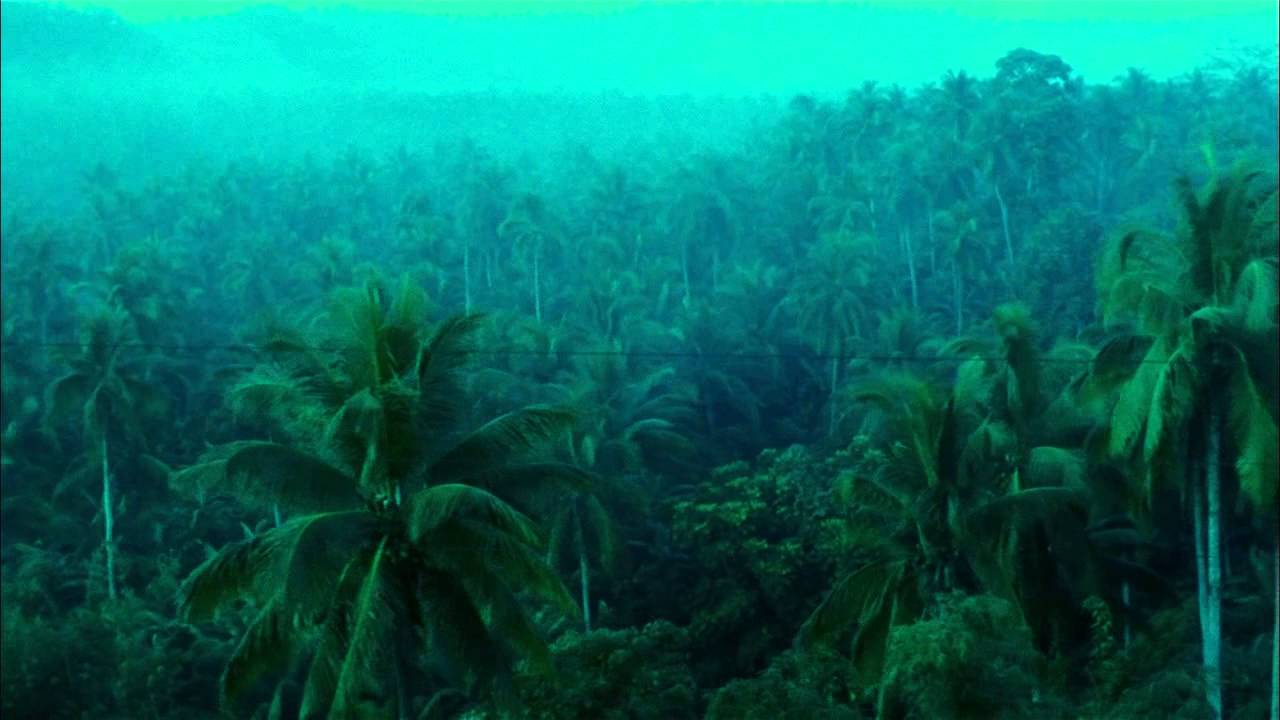
Like Days of Being Wild, Happy Together features one haunting central image which exists outside of the characters and represents something larger than them. The image in Days of Being Wild was that of a thick, overpowering jungle in the Philippines - lush green in color and symbolic of the characters' imprisonment by their respective desires. In that film, this crucial image is shown in an extended shot following the opening sequence, and again in the final section of the film. In Happy Together, the same technique is used, but this time the image is a distorted vision of the Iguazu waterfall on the border between Argentina and Brazil, the lovers' original destination upon their arrival in the country. For the characters, it is a dream kept alive by a lamp with the waterfall's image, which Tony Leung's character keeps in his Buenos Aires apartment.

The image of the falls, shown once early in the film and in another extended shot at the end of the film, takes the viewer away from the central storyline and magnifies the scope of the characters' feelings. This technique creates a meditative atmosphere in which the story and themes expressed in the film become symbolic and universal. In this way, the falls are a classic Wong Kar-Wai image. Simultaneously beautiful and terrifying, this image is perfect for a film about a torrential relationship which destroys both participants while simultaneously providing them with the companionship they crave in each other's absence.

Image result for happy together waterfall

Sunday, April 1, 2018

#670: Days of Being Wild

Directed by: WONG KAR-WAI
1990, TSPDT Rank #373

Days of Being Wild begins in an arresting fashion, showing a series of encounters between a brash young man (Leslie Cheung) and a shy young woman (Maggie Cheung) at the deserted shop counter where the woman works in early 1960s Hong Kong. As with much of the film, these scenes seem to occur in a theatrical dream world where the real world rarely seeps in. The man, York, unloads his rage towards his adoptive aunt and the mother he never knew by seducing women with his rough charm and then degrading and dismissing them once he has them on the hook. A number of other characters gradually enter the picture, although the feeling of confinement and emptiness persists.

As a result, Hong Kong is shown in a completely different light from its usual cinematic image. Despite a few brief outbursts of violence (also in confined settings), there is little kinetic energy, no bustling street life - just a subdued landscape populated by characters invested in their own solitary emotional angst. Although it's sometimes difficult to become invested in the emotions of these flawed and insecure characters, the film was the first collaboration between Wong and master cinematographer Christopher Doyle (who also worked on later Wong films like Chungking Express and In the Mood for Love), and as such it is always visually stunning. The color palette is lush and cool, while the textures convey a general atmosphere of grimy and stifling humidity. There's also a feeling of the characters existing on a lone outpost at the edge of the world, which is amplified in the final section of the film, as York and ex-policeman Andy Lau as embark on a doomed train ride through the Philippines' tropical jungle that feels like a journey to nowhere.

Image result for days of being wild jungle

THE ENDING (spoilers)

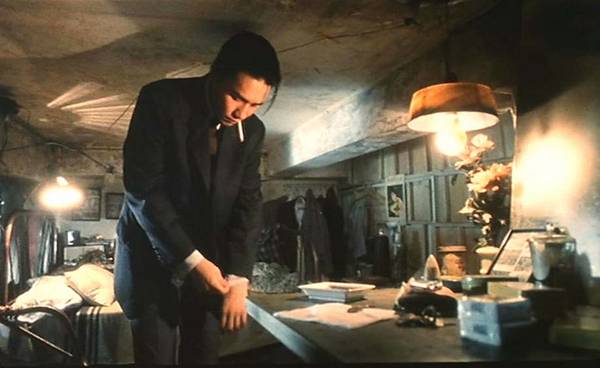
While the majority of the film is fairly straightforward despite the strange theatrical atmosphere and  lack of closure or resolution between the characters, the ending section provides a template for Wong's later experimentation with time and narrative structure. Glimpses of the two women seduced by York earlier in the film (Maggie Cheung and Carina Lau) are interspersed with shots of a clock and a ringing phone. But the two male characters are suddenly replaced by a third, a well-dressed man played by Tony Leung (who would later star with Maggie Cheung in In the Mood for Love), shown in dressing for a night out in a cramped apartment. This scene plays out in one long dramatic long take, and the musical theme seems to connect this unknown character to York and Lau, suggesting some type of connection between the three - maybe even some type of transfiguration.

Related image


This unexpected and mysterious ending is reminiscent of the sudden gear-shift at the end of In the Mood for Love, which casts everything that came before in a new light. Here the intended meaning is less clear, but the effect is no less beguiling. In any case, while Days of Being Wild is not as satisfying as Chungking Express or In the Mood for Love as a whole, Wong and Doyle's visual mastery was already on full display in this early work, and many of Wong's later themes and narrative devices can be traced back to this film (which has been said to form an informal trilogy with In the Mood for Love and 2046, Wong and Doyle's last collaboration to date).

Saturday, March 31, 2018

#669: Y tu mamá también

Directed by: ALFONSO CUARÓN
2001, TSPDT Rank #659

Mexican filmmaker Alfonso Cuarón had already made it in Hollywood when he came back to Mexico to make this personal road movie about two teenagers who take a road trip with the older wife of one of the boys' cousins at the tail end of their adolescence. On the surface, Y tu mamá también is a movie about sexual discovery and the innocence of youth - incorporating all of the good times and rude awakenings that this journey entails. But Cuarón frequently lets hints of political unrest and corruption among the powers-that-be seep into the frame, seemingly unnoticed by the main characters, making for an uncomfortable blend of sexual comedy and political commentary reminiscent of the films of Pier Paolo Pasolini. The film also emerges as a bittersweet celebration of the fleeting nature of the present, those times when the past and future don't matter, and the search for unrestricted pleasure and freedom is able to block out the chaos and harsh realities of modern life.

Related image
Purchase Criterion Blu-ray/DVD

Monday, March 26, 2018

#668: The Life and Death of Colonel Blimp

Directed by: MICHAEL POWELL & EMERIC PRESSBURGER
1943, TSPDT Rank #173

The Life and Death of Colonel Blimp immediately dispels all preconceived notions of a stoic wartime epic with its madcap opening sequence, which shows a group of British Home Guard officers rushing into a simulated battle for London with reckless abandon. This opening sequence is manic and fragmented to the point of absurdity, but the film soon coalesces into brilliantly-told story of a young British officer who distinguishes himself in the Boer War and World War I, only to become an outmoded symbol of the old guard by the time World War II breaks out. Along the way, Colonel Blimp explores themes like the role of generation gaps, nationalism, military honor, romance, and friendship. The final section of the film reveals it as a subtly-structured piece of propaganda, albeit one which never betrays its multi-faceted view of human nature and pure entertainment value in the process. Since the wartime era in Britain called for more blatantly nationalistic entertainment, Winston Churchill attempted to have the film suppressed, but thankfully it has survived - a unique and unfairly overlooked classic.

Purchase Criterion Blu-ray/DVD

Sunday, March 11, 2018

Through the cracks

When I counted the number of films that I have seen from the new version of the 1,000 Greatest Films last month, I found a number of films which I had seen over the past few years but had forgotten to right a post on for one reason or another. As a result, I have compiled them into a list of short reviews as a way of catching up and filling in the gaps.

-----------------------------------------------------------------------------------

The Thin Blue Line
Directed by: ERROL MORRIS
1988, TSPDT Rank #247

After years of dormancy, The Thin Blue Line finally delivered on the promise shown by Errol Morris' 1978 debut feature, Gates of Heaven (an incomparable portrait of pet cemetery owners and their clients). This time, Morris gave birth to the modern true-crime documentary, employing extensive reenactments of the 1976 Dallas police shooting which sent an innocent man, Randall Adams, to prison for life. Combined with this staged footage are extended interviews with Adams (11 years into his sentence at the time) and David Harris (the man who was likely the actual murderer), along with many others involved with the crime and/or the trial. Morris' film gives the viewer an exhaustive view of this miscarriage of justice - a view so revealing that Adams was pardoned shortly after the film's release.

Safe
Directed by: TODD HAYNES
1995, TSPDT Rank #478

Safe has been described as an allegory for the AIDS crisis of the '80s and '90s, but it also functions as a withering critique of the lucrative self-help movement that was booming during that era. It is a very unsettling and challenging film, aided by Julianne Moore's incredible performance as an extremely ineffectual upper-class housewife who eventually becomes convinced that she suffers from "environmental disease". Moore went to considerable lengths to transform herself into the character - starving herself to the point that she was actually living her character's descent into weakness and helplessness in real-life. A great breakthrough film for Todd Haynes, and a classic evocation of post-modern dread.

Le Samouraï
Directed by: JEAN-PIERRE MELVILLE
1967, TSPDT Rank #204

Iconic French director Jean-Pierre Melville may not have known much about Japanese warrior code when he made up a quote from the "Book of the Samurai" (Bushido) to open his film about a solitary hitman (played by the equally iconic Alain Delon), and this thriller about the isolated life of a lone gunman ended up revealing more about the French tendency for stoic fatalism than the similarity between French gunmen and samurai from Japan's feudal era. It might have been more effective if it had focused more on Delon's Jef Costello, instead of highlighting the investigative methods used by the police in their attempts to prove his guilt. Still, Le Samouraï is a prime example of icy late-'60s French cool, despite its tedious procedural sequences and relative lack of substance.

Woman in the Dunes
Directed by: HIROSHI TESHIGAHARA
1964, TSPDT Rank #359

Hiroshi Teshigahara's masterpiece begins with shots of a man walking alone across a barren wasteland of sand, a perfect example of the visual emptiness commonly found in Japanese art. However, the man soon happens upon a remote village hidden within a sand pit, eventually becoming trapped in a waking nightmare which is possibly the most effective portrayal of Sisyphean struggle ever put onto film. Equal parts erotic thriller and philosophical meditation, it is easy to see how Teshigahara's blend of the exotic and the familiar struck a chord with the international art house circuit upon its original release - and it has lost none of its disturbing allegorical power over time.

Ugetsu monogatari
Directed by: KENJI MIZOGUCHI
1953, TSPDT Rank #50

This historical fable from Japanese master Kenji Mizoguchi is usually categorized as a ghost story, but at its core is a profound meditation on the human cost of war and the effects on those who survive. Set during the 16th century at the tail end of an extended period of civil war in Japan, Ugetsu monogatari employs deliberately placed supernatural elements along with atmospheric black and white cinematography to convey the central concept that "success always comes at the cost of suffering" - especially in wartime. It is exquisite in its structure and subtle in its delivery, and its careful blend of historical and spiritual elements makes it one of the most quintessentially Japanese films of all time.

Breaking the Waves
Directed by: LARS VON TRIER
1996, TSPDT Rank #211

Breaking the Waves was the film that catapulted Lars von Trier to worldwide stardom, while also introducing first-time actress Emily Watson in an intensely emotional performance as a pious woman who struggles with her paralyzed husband's instruction that she sleep with other men in his place. Von Trier's work is always stylistically interesting, but as Watson herself has pointed out, this film emphasizes "the extremes of human experience," making for an overwrought viewing experience that gives the viewer little room to breath and contemplate the spiritual dilemma at the center of the film. As a result, the film's ending, which many have described as powerful and breathtaking, ultimately collapses under the weight of the sensationalism which pervades the rest of the film and further confuses the spiritual issues at hand.

La région centrale
Directed by: MICHAEL SNOW
1971, TSPDT Rank #483

Michael Snow's three-hour examination of a remote Quebec mountain top is an endurance-testing experimental epic which turns into a whirlwind dismantling of time and space in its final hour if watched under the right conditions (total darkness and no interruptions). Snow's concept for the film involved programming a camera to zoom and pan around the aforementioned landscape at intervals over the course of a 24-hour period. The addition of monotonous electronic bleeps throughout the course of the film will further try most viewers' patience, but the end result is that of seeing Earth from an alien's point of view, resulting in many eerie and surprisingly transcendent moments along the way. For those who can stand it, La région centrale is a one-of-a-kind experience - a landmark of structuralist cinema.

The 39 Steps
Directed by: ALFRED HITCHCOCK
1935, TSPDT Rank #606

Many have hailed The 39 Steps as Alfred Hitchcock's first "masterpiece," the first of his many films about good men wrongly accused of murder, with a bit of romantic comedy thrown in along the way. When it comes to the work of a consummate master like Hitchcock, which includes so many masterpieces, it's clearly tempting to nail down the point at which that director's mastery was first present. However, The 39 Steps might be said to be the first Hitchcock film where everything really came together, as it lacks the unevenness of earlier works such as Blackmail and The Man Who Knew Too Much and features many elements which would later become Hitchcock trademarks.

Thursday, January 11, 2018

#619: Meet Me in St. Louis

Directed by: VINCENTE MINELLI
1944, TSPDT Rank #213

I've never been a fan of Vincente Minelli, Judy Garland, or musicals in general, so Meet Me in St. Louis was never high on my watch list. However, I finally watched it today and was pleasantly surprised. It's an early example of what we know as the classic Hollywood musical, something that it pulls off with great warmth and feel-good charm in its portrait of a St. Louis family in the year before the 1904 World's Fair. There is really no more of a story than that - Meet Me in St. Louis is unique in its essentially plotless nature, instead using a loose series of vignettes based upon the seasons to convey the Smith family's connection to their hometown and each other. The film also incorporates an extraordinary degree of period detail in its costumes and sets, which are all tailor-made for Technicolor, creating a perfect vision of a more innocent time in American history. Furthermore, Judy Garland is effortlessly radiant here, possibly even more at her peak than she was in The Wizard of Oz.

If you're resistant to musicals like I am, or have just never gotten around to seeing this classic film, I recommend putting aside your reservations and giving Meet Me in St. Louis a try. It sits comfortably alongside films like Gone With the Wind and The Wizard of Oz as a prime example of Technicolor's eye-popping potential, and its brilliant ensemble cast (including Lucille Bremer, Mary Astor, Margaret O'Brian, Marjorie Main and Henry Davenport) and endearing script make it much more than a Judy Garland feature.

https://theredlist.com/media/database/films/cinema/1940/meet-me-in-st-louis/002-meet-me-in-st-louis-theredlist.jpg